
What is UNREAD?
UN- Unlearning of concepts that locate disturbances in an individual.
RE- Relearning the ability to think critically as well as understanding life stories within the larger sociocultural and political context.
AD- Adapting to the ever-changing nature of human life;
Advocating for every person’s and every community’s right to dignity in mental health care is essential in developing a conscious eco-bio-psycho-social attitude towards growth.
UNREAD is a 6-month experiential learning program with 550+ hours of time commitment. The program will guide your journey as a practitioner with the help of concepts from a relational psychodynamic framework, Group Analysis, Therapeutic communities and looking at mental health from a distress over diagnosis lens.
It is not a psychotherapy training program in a traditional sense; it will not certify you as a clinician. However, UNREAD offers space for you to explore, challenge and expand your understanding of the skills it takes to be a mental health practitioner. It is a journey that you embark on with your peers for 6 months, where learning and unlearning happen as you connect with one another and the larger HNI community.
Beyond your time and financial investment, this program also demands emotional engagement with parts of your story & context that this journey will evoke. You can expect a space that will help you build the capacity to think relationally and critically, trace and question inherited truths, and build a culture that can hold differences.
Framework
UNREAD is designed with the conceptual model of Therapeutic Communities (TC).
At its core, TCs are environments designed with a belief that healing happens when there is a sense of belonging, safety, and openness. This is achieved through communication, involvement and participation of the TC members. It is a structured environment to facilitate the developmental journey of a community and thus the individuals in the community.
Alongside TCs, UNREAD is also structurally held by principles of Group Analysis and Relational Practices. Both of these principles give UNREAD a foundational understanding of how our emotional, behavioural and psychological phenomena are interdependent and emerge from both the inside and the outside world.
We use these frameworks as a scaffolding for UNREAD as it not only taps into the experiences and clinical skills of being a practitioner in various settings but also enables them to understand themselves as a part of a community.
As an UNREADer, you are invited to be an active participant in questioning, building and co-creating this environment.
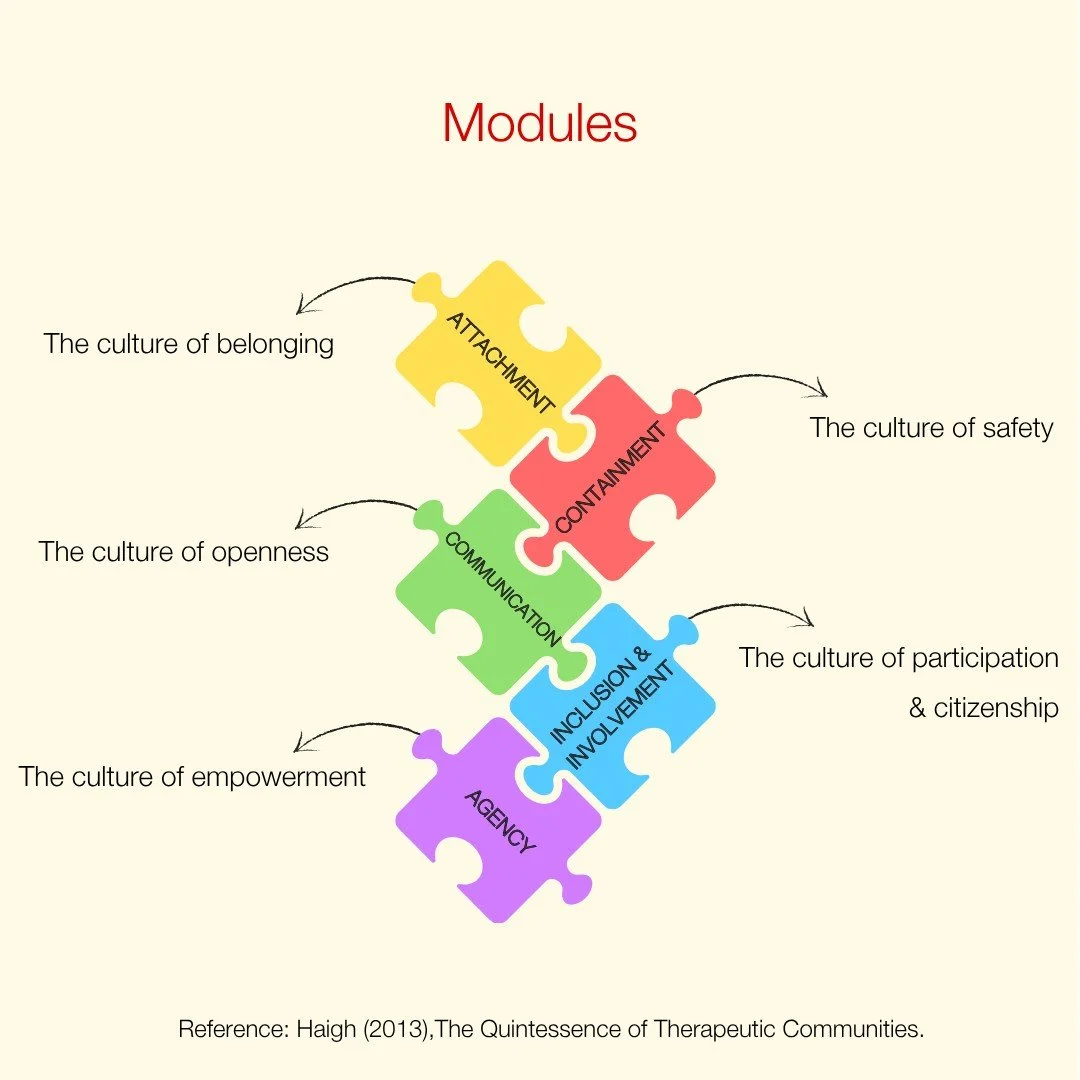
The program is anchored by 5 psychosocial concepts that influence the approach to relationships and work at HNI.
Theoretical Underpinnings
Therapeutic Communities (TCs)
Group Analysis (GA)
Relational Practice (RP)
Who’s this for?
We are looking for participants who are open to the perspective of prioritising people over diagnoses, and are willing to reflect on difficult experiences belonging to themselves and others. It is open to mental health practitioners (counsellors, early career therapists, therapists who want to experience a different framework, psychiatrists, etc.), social workers, or community workers.
UNREAD is for you if you are interested in:
exploring mental health practice beyond the traditional, clinical set-up, and
eager to approach mental health from a community-centric and relational lens.
It can be a starting point into your journey of mental health.
Who is it not for?
People with full-time commitments and inflexible part-time commitments.
People pursuing other intensive learning programs.
People looking purely for clinical training might not find this program suitable.
We do not encourage individuals who are currently in therapy at HNI or those who share other sensitive boundaries with the existing therapy-users/ therapists at HNI to join UNREAD in order to maintain the safety that comes with keeping these boundaries intact. However, if you have terminated therapy 2 years ago with no contact with your therapist, you could apply for UNREAD with the awareness that this will take away the opportunity to resume therapy with the same therapist in the future, if needed. Like other nuanced aspects, this can be a longer conversation that we have during the intake conversation.
Cost of the Program & Intake
Sliding Scale INR 10,000 - INR 16,000 per month + 700 (weekly experiential group fee)
Selection will happen based on application and intake conversations.
Applications open - 7th August
Last date for Application - 5th September
Final List - 14th September
Program begins - 5th October 2026
Program ends - 2nd April 2027
Frequently Asked Questions
-
The program duration is 6 months, from 5th October 2026 to 2nd April 2027.
-
Once you fill out the application form, you will receive the date and time to meet us for an intake conversation. This conversation with the HNI staff team will be focused on getting to know you better, discussing your responses on the application form, and understanding your journey so far. It is also a space to respond to your concerns and anxieties about the program, and help you assess whether UNREAD is the right step for you.
-
The program is open to anyone who meets the eligibility criteria, who is willing to commit to the program for 6 months, and is not a patient at HNI or does not have a boundary conflict with an existing patient or therapist at HNI.
-
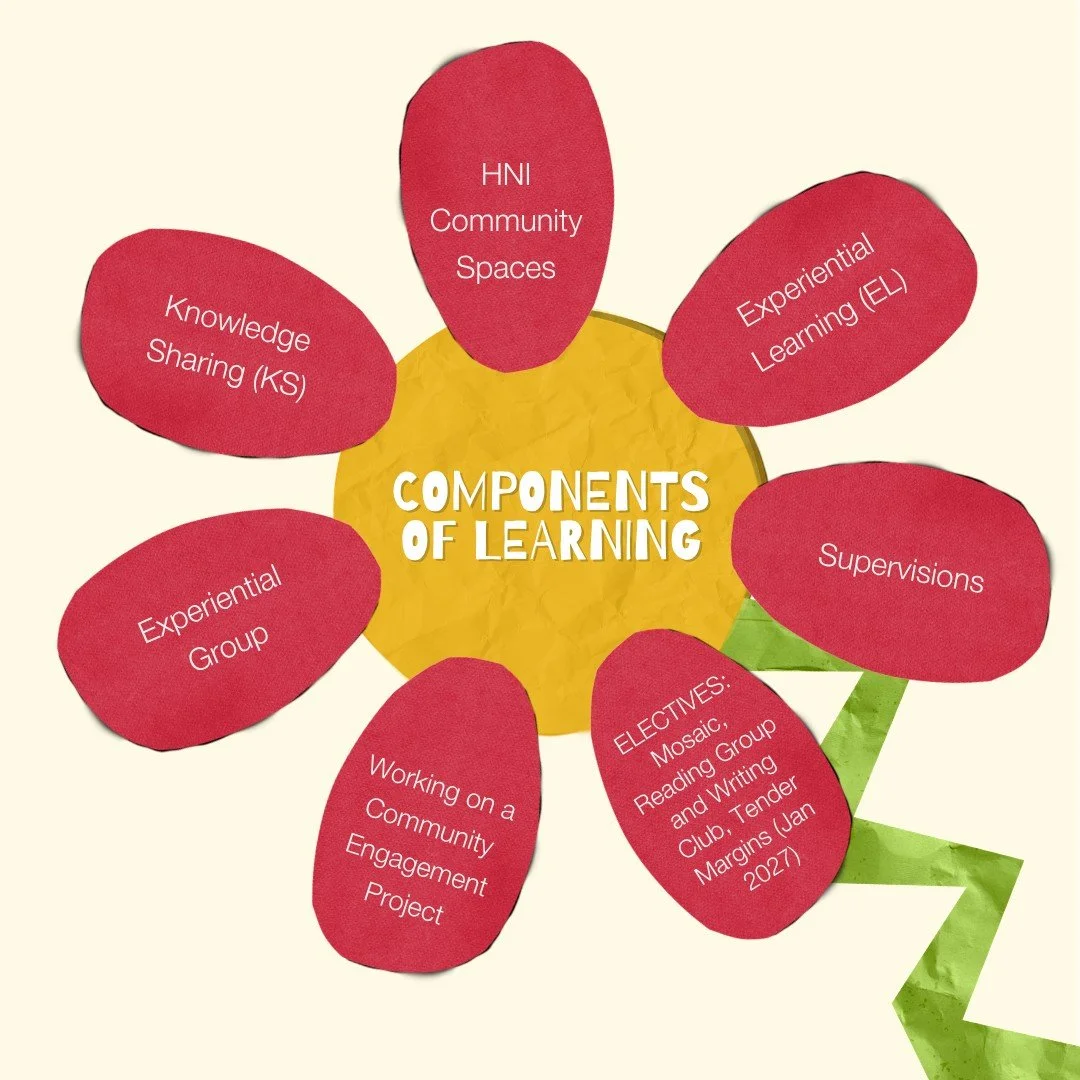
The program aims to cover basics of psychotherapy from a relational, psychodynamic framework, basics of group therapy, therapeutic communities framework, intersections of power and privilege, working with communities, grief and loss looking at mental health from a distress over diagnosis lens among others. For the duration of the program, you are also required to be in an experiential group with your peers to help you reflect, connect and make sense of your UNREAD journey. We do encourage you to also consider personal therapy to provide further support.
-
Yes. We are offering a sliding scale with the intent to make this affordable for people from varied financial backgrounds. The fee ranges from INR 10,000 to 16,000 per month. Each participant will also be required to engage in the experiential group as part of their learning experiences and will need to bear the cost for the same independently. We have done our best to keep the fee at the lowest end possible. As there are no external sources of funding to support this program, we are unable to offer any scholarships.
-
No. UNREAD is being held online for 2026. All you need is a room of your own and good internet connection. You can join team members in Delhi, Mumbai, Pune, and Bangalore for in-person team meetings if you are in these cities.
-
Psychotherapy, unlike clinical psychology, is not yet a recognised licensed profession in the Indian mental healthcare system. Thus, UNREAD, while robust and application based, is not a qualifying course.
-
There is enough space for each participant to design their own week outside of the regular weekly spaces. Your time at UNREAD will be structured across 5 days a week. Most of the learning spaces will be accommodated between Mon-Fri from 08:30 AM – 08:30 PM with breaks through the day. Certain spaces and other ongoing programs like the community awareness events, alternative large group, webinars, and occasional informal meetings happen over the weekend as well. You can choose if you want to be a part of these or not.
-
Participants will be required to complete all 6 months in order to receive the certificate of completion. Since the program is revised each year, and components often overlap or follow through in continuation, it is not possible to attend it in parts.
-
We would advise against joining UNREAD if you have already committed to engaging in another full time job or learning space. UNREAD is designed to be a full time intensive program. Along with intellectual stimulation, it also places emotional and psychological demands on participants. Learning to work with others requires us to develop consistent awareness of our own thoughts, feelings, and behaviour. This means the time that is available for rest and leisure is also important for you to be able to absorb and digest all that has been churned up during the week.
-
We do not encourage individuals who are currently in therapy at HNI or those who share other sensitive boundaries with existing therapy-users/therapists at HNI to join UNREAD in order to maintain the safety that comes with keeping these boundaries intact. However, if you have terminated therapy 2 years ago with no contact with your therapist, you could apply for UNREAD with the awareness that this will take away the opportunity to resume therapy with the same therapist in the future, if needed. Like other nuanced aspects, this can be a longer conversation that we have during the intake conversation.
** Please read everything above including the FAQs before making an informed choice to apply.
Testimonials